What Does Hygiene Poverty Look Like?
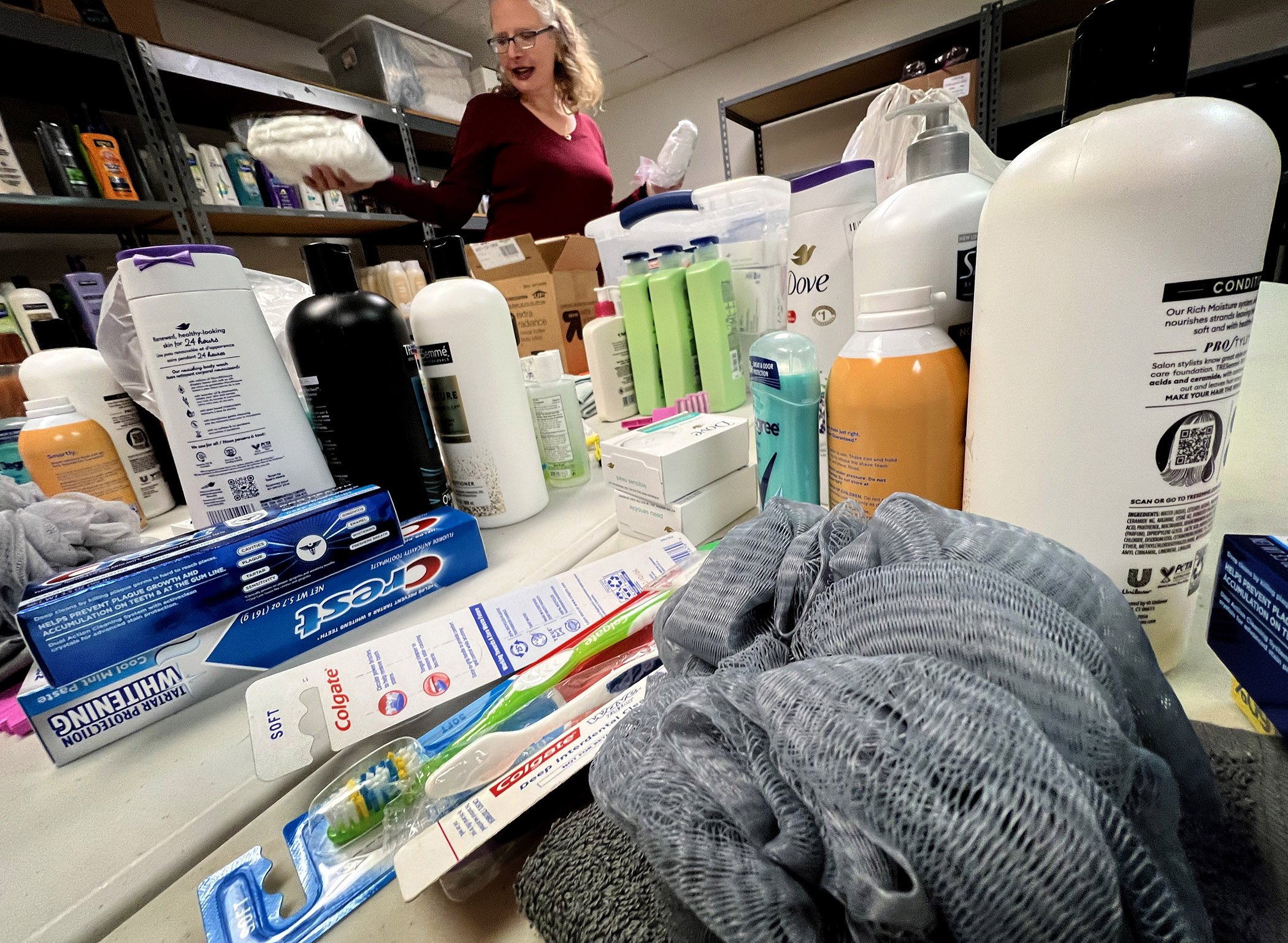
Sharing Projects Coordinator Vicki Burstynowicz sorts through personal care items.
Hygiene poverty isn’t a term you hear every day, but for millions of people in America, it’s an uncomfortable and often painful reality.
For many of our neighbors, staying clean isn’t as simple as stocking up during the next trip to the store. When every dollar matters, families often face an impossible choice: heat, eat or health. In those moments, basic personal care items become luxuries rather than essentials.
It’s more than running out of shampoo or forgetting deodorant. It’s the accumulated, daily stress of not having what you need to feel confident, comfortable, and prepared.
It’s going to a job interview not feeling confident because you’re worried about body odor.
It’s choosing between shaving cream and a razor or deodorant and toothpaste.
It’s missing work because you don’t have access to period products.
It’s washing your hair with hand soap because shampoo isn’t in the budget.
It’s being bullied at school because your family can’t afford the hygiene items everyone assumes you have.
These situations take a toll, not only on physical health, but also on mental, social, and emotional well-being. They chip away at a person’s sense of dignity. They make it harder to confidently show up in the world.
What makes this issue more challenging is that programs like SNAP and WIC don’t cover hygiene items. Families are left without the resources to buy toothpaste, soap, deodorant, or other necessities. Each year, NHCO provides every individual and family we serve with a bag of personal care items so they can feel clean, confident, and cared for. Learn how you can help on the following page.